Showing posts with label Egypt. Show all posts

Monday, 4 February 2013

Bellydancing and the Blues

If you haven't heard all about it yet, Guy Schalom - talented darabuka player, dancer and leader of the Baladi Blues Ensemble - recently recorded a programme for BBC Radio 4 all about traditional Baladi Egyptian music and dance.

Bellydancing and the Blues

Bellydancing and the Blues was broadcast on Boxing Day at the end of last year.  The good news for anyone who didn't manage to tune in on the day is that the programme is available to listen again on BBC iPlayer on a permanent basis.  

The is an insightful documentary about a traditional form of Egyptian music and dance and how both developed and grew through interplay between east and west.  There are some fascinating contributions from distinguished musicians and dancers from Germany, the UK and Egypt including Raqs Sharqi Society trained Jane Wass, music producer Jennifer Carmen and Egyptian accordion master Sheik Taha.  I particularly loved hearing a different spin presented to the history of belly dancing past and present.  And as a real bonus, the whole show is ornamented with musical excerpts of beautiful Egyptian music, including from Guy's own Baladi Blues series of CDs. 

Guy Schalom
Here's an extract from the blurb on the BBC website:
"Dancer and drummer Guy Schalom hunts out the spirit of the new Egypt in one of its biggest cultural exports. To our ears, Baladi is the music of the bellydancer - kitsch and mock-Arab. But in its true form it is the essence of Egypt, 'of the country', 'home' in the deepest sense..."
To listen to the programme in full go to BBC iPlayer

Sunday, 23 October 2011

Breathing New Life into an Ancient Legend

Dream of an Egyptian Night (Songe d'une Nuit d'Egypte) is a contemporary dance show; which takes its inspiration from the Egypt of the pharaohs, and the goddess Hathor.
(c) Tarab of Egypt
The legend of the goddess Hathor has enabled Béatrice Grognard and her dancers to plunge into the dazzling artistic and intellectual richness of the Egypt of the pharaohs.  Thanks to its musical excerpts drawn from numerous Egyptian repertoires and to the projection of paintings, sculptures, objects and antique sites, Dream of an Egyptian Night aims to celebrate an art which spans two millennia.  The show combines both ancient Egyptian spirituality and sensual pleasure; reflecting Béatrice Grognard’s fifteen years of research and experience of creating performances.  

“A celebration of the powerful femininity of the sun which is a mysterious expression of the beauty of the world and the magic beyond…”
(c) Tarab of Egypt
When the show debuted in Brussels last year it drew critical acclaim and was even featured on Egyptian television’s “Good Morning Egypt” news programme (Sabah el kheir ya Masr) and the Belgian news on Télé Bruxelles.  Here is a short clip from the original show.


Songe d'une nuit d'Egypte - Tarab / Béatrice... by tarabofegypt

You can watch further clips of extracts from the original show (Songe d’une nuit d’Egypte) on the Tarab video channel on Daily Motion.

The exciting news is that thanks to Ellie Atkinson of Zahira Dance and Raqs Sharqi Dorset, and after playing to audiences in Belgium, France and Italy, this amazing show is coming to UK this autumn – to theatres in Bristol in October and Leeds in November! And more good news, both shows will be followed by 2 days of workshops.  Here are all the details.  

Bristol show
Friday 28 October 2011, doors at 7.30pm. 
Queen Elizabeth Hospital Theatre, Berkley Place, Clifton, Bristol, BS8 1JX. 
Tickets are £16.50 including booking fee
To reserve go to www.bristolticketshop.co.uk.

Bristol workshops
Dance Space at the Island (Bridewell St entrance), Bristol, BS1 2PY
Saturday 29 October, 11:30-16:00 - Baladi
Sunday 30 October, 9:30-14:00 - Sha’abi (the rural style from Upper Egypt)
Each workshop costs £45
Bookings can be made by contacting Ellie Atkinson.

Leeds show
Friday 18 November, doors at 7.30pm.
Northern Ballet Theatre, Quarry Hill, Leeds, Yorkshire LS2 7PA. 
Tickets are £16.00 including booking fee. 
To reserve go to www.northernballet.com

Leeds workshops
Northern Ballet at Quarry Hill, Leeds, Yorkshire, LS2 7PA
Saturday 19 November, 11:30-16:00 - Classical from the ottoman courts
Sunday 20 November, 9:30-14:00 - Sufi.
Each workshop costs £45
Bookings can be made by contacting Ellie Atkinson.

Béatrice is an inspirational and generous teacher of her own particular style of contemporary and theatrical Egyptian dance. I’m so excited by this that I’m even planning to travel from my home in Edinburgh to both Bristol and Leeds weekends so I can attend both workshop weekends and I’m even thinking of seeing the show twice.  I’m particularly excited by the Sufi style, I’ve only done this a handful of times before with Béatrice and it is an incredible experience, not to be missed. 

Béatrice Grognard is one of the foremost European teachers of contemporary Egyptian Dance.  I first discovered Béatrice Grognard when I started attending her classes when I worked in Brussels for a spell in 2006. Attending her classes twice a week was a wonderful escape from what was a very busy but exciting period in my life. And since returning to the UK, I have continued to train, attending Béatrice’s occasional UK workshops and participating in two of her study trips to Egypt to work with live musicians. 

At the end of last year, I attended an amazing weekend of workshops with Béatrice organised by Diane and Ellie of Raqs Sharqi Dorset.  The learning was deep and amazing.  The Baladi focused on the meeting between singer, musicians and dancer, melting together like hot chocolate into a single melody.  The Ghawazee class helped us to explore strength, femininity and most of all fun, working with signature moves like throwing hips, twists, dynamic movements, wide shimmies, and rhythmic footwork.  And the jewel in the crown of the workshop weekend was Sharqi, the modern and classical form of the dance, almost contemporary in its interpretation.  Béatrice opened our eyes to challenging all our assumptions about how to interpret the music, unpicking many years of learning the “correct” way to dance.

About Béatrice Grognard

(c) Tarab of Egypt
Béatrice Grognard divides her time between Europe, Cairo and Brussels where, in 1998, she founded the "Tarab”, School of Theatrical Dances of Egypt". She has dedicated the last 15 years to the study and research of Egyptian music and dance. Trained as an archaeologist, Béatrice has always had true passion about arts and dance. Since 1991, Béatrice has devoted herself exclusively to dance and choreography and, thanks to her tremendous enthusiasm, has dedicated herself to defending the beauty and the authenticity of traditional Egyptian dances. Her quest today is directly linked to her original interest in archaeology: to bring forward Egyptian dance and the music of the past, redefine their boundaries and breath new life into them with theatricality introduced on stage, therefore ensuring them new life and a future.  For more information about Béatrice, see www.tarabofegypt.com.

www.habibadance.com

Saturday, 9 April 2011

An interview with Om Kalthoum

I've just come across this beautiful interview with Om Kalthoum, recorded just after her concert at the Olympia Théâtre in Paris, in November 1967.  This was the one and only time in her career that she performed outside of the Arab world.  It's a delightful, if short interview with questions asked by a star struck young interviewer.  The Star of the East herself presents as stately, somewhat reserved, entirely modest, and of course overwhelmingly patriotic.


As for the impact of the concert, judge for yourself.   Here is an extract of Om Kalthoum singing Enta Omri, "you are my whole life".  This is also subtitled in English. 


For any dancers new to Om Kalthoum who want to learn more, I should mention the lovely dancers resource complete with recommended listening and You Tube links on Candi's website.

www.habibadance.com

Monday, 21 February 2011

Profiting From Others

Recently, I was offered for sale a homemade CD from a local belly dancer.  It was a compilation featuring a variety of oriental music, sold in a plastic sleeve with a photo of the dancer, and with no track listing or other information. 

At £10 a CD, it's obviously a nice way of supplementing a dancer's income, particularly at workshops where eager students can clamber to purchase the track used in the class.  But this brings with it unfortunate consequences.

I can try to explain more about the implications of music piracy, but it's probably better to watch Beata Cifuentes, one of the victims of this type of crime, explaining for himself.  


If you want to understand more about how much of the heart and soul of an artist goes into producing original oriental music, I would also recommend reading Yasmina of Cairo's article in this months NADA magazine.

Finally, this is one of my favourite CDs:


This music was produced by Jennifer Carmen of Layali El Sharq music.  One of the tracks is a beautiful Baladi accordion progression, played by Sheikh Taha (for more about Sheikh Taha read the latest issue of Mosaic magazine). Last month, I watched an experienced professional performer dance a lovely rendition to this very piece.  I  approached the performer later that evening to speak to her about what is one of my favourite pieces of music.  But I quickly discovered that she wasn't even aware of where the music had come from, let alone know the name of the artist.  And she was far from understanding the story behind it (which you can read here). 

In the Arabic Dance world, performers are increasingly conscious of finding out exactly what style they are dancing to, ensuring that they understand the lyrics and are sensitive to the culture which the music comes from.  So why should so many of these same artists have no reservation about disrespecting the artistry and hard work that goes into producing the very recordings that they dance to?

www.habibadance.com

Monday, 18 October 2010

The Challenge of Glasgow by Gaslight


Saturday night I had the honour of making a guest appearance in Sarasvati Tribal's show the Gaslight Faeries at QMU, Glasgow University.

Gaslight Faeries was originally conceived for the Britannia Panopticon Music Hall - the oldest surviving music hall in the UK - as a show with a connected series of Fusion dance acts, each taking a little bit of inspiration from the era of the Panopticon itself (1857-1938).  The first performance of Gaslight in August packed out the tiny auditorium of the Panopticon in the Trongate, Glasgow, with many people turned away.   The show contained a mix of Tribal Fusion group and solo performances, with the addition of a sprinkling of comedy, burlesque and good old fashioned story telling that featured the Dragon Lady, Cleopatra, the Victorian Gent and Mata Hari amongst its characters.  

About 2 weeks before the Panopticon show premiered in August, Laura from Sarasvati got in touch to say that one of her guest stars had pulled out and ask whether I was willing step in.  The challenge was to create an act complete with music that would look and sound in keeping with the era that the music hall was open.  I accepted.  My first stop was Wendy Holyer of Wen-D Designs to set about creating a period costume.  We settled on the design for a purple silk Ghawazee coat and while Wendy slaved over the dress, I put together a Courtly Classical dance to Farid El Atrache's Kharamana.

Following the sell-out Panopticon show, the Sarasvati girls decided to do the show all over again and I was asked back for another guest slot.  With a little bit more time to prepare, I had the chance to rework my act.  As I've been learning and teaching a lot of rural Sha'abi style Egyptian Dance, this was the style that I had really wanted to showcase and I thought it would provide a real contrast to the rest of the show.  Also, whilst researching I found inspiration in a beautiful film from Serpentine video about the French World Fair in 1889 which described the first European appearance of the famous Ghawazee dancers.  I have studied Ghawazee dance accompanied by Sai'idi muscians during recent study trips to Egypt and this seemed like the perfect opportunity to present a dance and music tradition that goes back centuries, but is still performed (albeit rarely) in Egypt today. 

I settled on my act, "L'Exposition Universelle" (the world fair), to evoke a time when thousands flocked to Paris to visit La Rue du Caire and gain a glimpse of the most unusual dancing you have ever seen.  But there was one further addition I felt I needed to add to the authenticity of the interpretation, sagat.  Sagat, the "metal castanets" described in Serpentine's film are always used by the dancers from the Ghawazee tradition and this was a skill I've always wanted to learn.  So I took the chance to practice and attempt to master the coordination of percussive fingers combined with strong hips.  And, although I wasn't yet entirely proficient at both at the same time, I decided to go for it for my performance on Saturday, at least to try to give a taste of what it might have been like to watch this dance in reality. 

The result, well it wasn't perfect, but the performance went down well and contrasted with the rest of the show.  The Wen-D costume also worked well and characteristics of the dance, particularly the energy and strength in grounded movement were conveyed.  Here is a photo of the end result.

A big thank you goes to Laura and Sarasvati Tribal for inviting me as a guest performer.  It was really a pleasure to work with them.  Sarasvati Tribal is a group of 4 dancers from across Scotland, led by the talented troupe leader Laura Monteith, a well respected Glasgow based Tribal Fusion dancer, teacher and choreographer.  Gaslight Faeries is their second production, following Extraordinesque which debuted last year and played to audiences in Glasgow, Edinburgh and Peebles.

The photos are courtesy of Violet Shears.

Sunday, 20 June 2010

Photogenic Cairo - Midan Hussain, Beit as-Suhaymi and the Nile

The Friday was a day of tourist delights as we packed in as much as possible before our departure to Luxor the following morning.

We started at Midan Hussein where we listened to the call to prayer and watched the crowds heading to the Mosque of Sayyidna Al-Hussein to pray.  Al-Hussein is the holiest site in Cairo and the most important mosque in Egypt, so sacred that only Muslims are allowed to enter.  Hundreds come to pray every day, and on a Friday this can go up to several thousand - when large umbrella's are opened outside the mosque to provide shade to those who cannot be accommodated inside. 


We then headed back to the streets of Islamic Cairo and Sharia Al-Muizz to see some of the sites in the daytime. 


We visited the Madrassa and Mausoleum of Sultan Qalawun, dating from the 13th Century.


We then visited the beautifully restored Ottoman house, Beit As-Suhaymi.  The most elegant remaining residence in Islamic Cairo, this was another clear highlight to our stay.  We explored room after room filled with beautiful panelled and painted ceilings, delicate wooden screens and ironwork, tiled floors, colourful light filtering through countless stained glass windows, all overlooking lush green courtyards.   


While we were looking round the house a lady with her daughter stopped to talk to us and ended up showing us all the things she learnt from the Arabic speaking tour - telling us something of the history of the place and pointing out the features in the rooms from the table 'just like her mother used to have' to the cupboards where the women used to store their things.


In the early evening, we went to meet Lorna and some of her friends for a sunset felucca ride on the Nile.  It was a wonderful way to spend an hour or so relaxing on the water, having a drink and a chat with the girls.


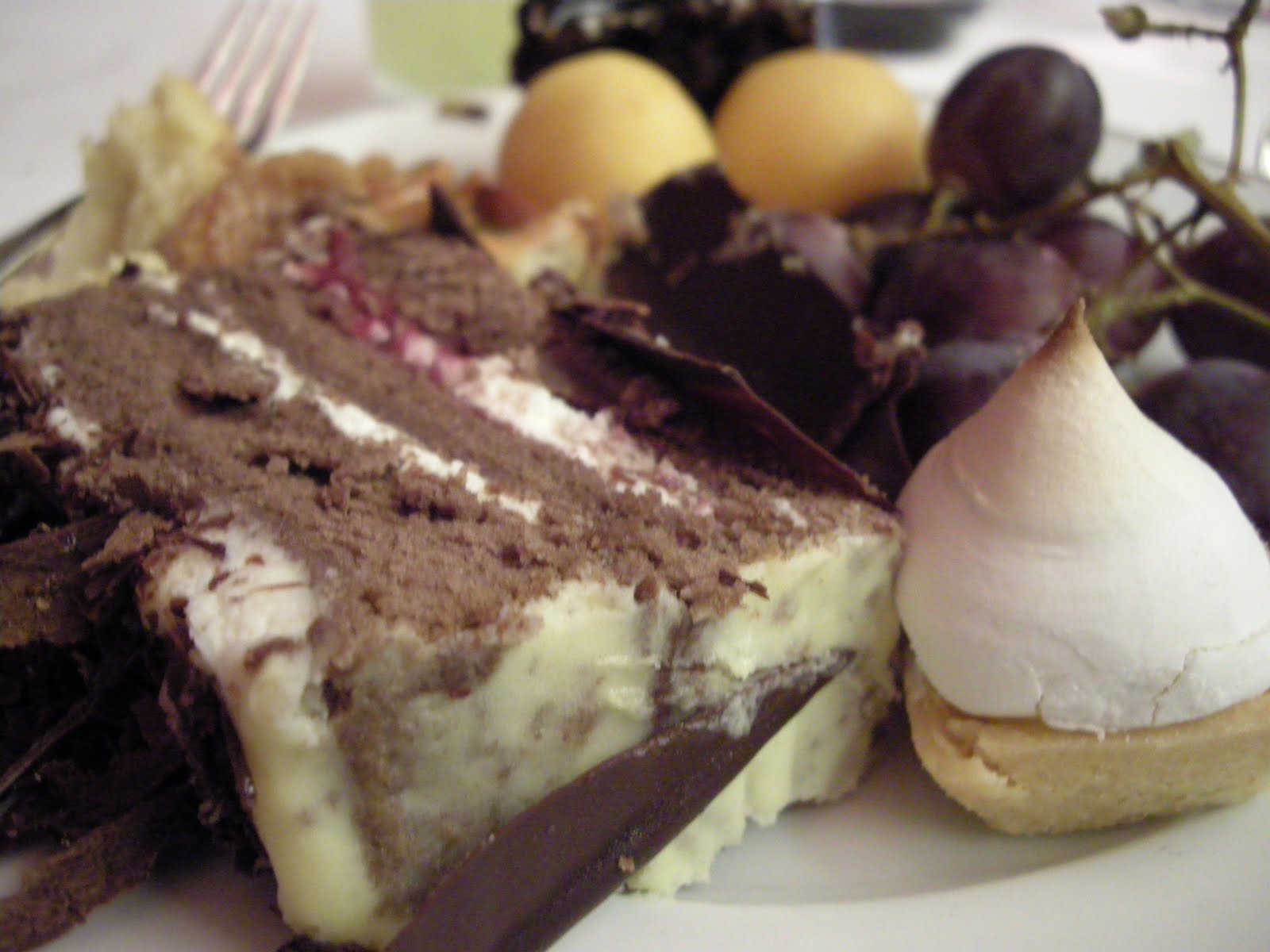
After the felucca, we went off to the Grand Hyatt to take our third evening cruise of the holiday. The boat was pretty quiet and the first part of the entertainment was bizarrely 2 singers taking turns to sing along to their ipod, karaoke style.  However, things picked up after that.  First of all with a fantastic dinner - the Grand Hyatt boat surely should probably boast the best food of all the Nile cruises - here is my very photogenic plate of dessert.


And after that we were entertained by bellydancer Camelia.  We were even dragged on stage at the end of the show to try some khaleegi style dance.  Here is Camelia with her Shamadan.


www.habibadance.com


Tuesday, 15 June 2010

Night of the Zar - the best of traditional Egyptian music

Makan, meaning the place in Arabic, is a small performance space in Downtown Cairo, by Saad Zaghloul metro, that holds regular concerts of live traditional music from the Egyptian Centre for Culture and Art (ECCA).  

The ECCA seeks to safeguard Egypt's rich musical heritage and oral tradition, researching, documenting, preserving, showcasing and celebrating some of the increasingly rare musical forms - both returning them to the Egyptian people and sharing with the world. 

One of the true highlights of my recent visit to Egypt, was a night at Makan to see the Mazaher ensemble, presenting the music of the Zar.  In its original form, the Zar is a healing ritual, one of the few, ancient healing ceremonies performed mainly by women for women. Zar is meant to pacify spirits and to harmonize the inner lives of the participants. A small circle of women gather with the aim of communicating, through music, song and energetic movements, with unseen entities or spirits.

Zar is a part of the underground culture and the practice of Zar in Egypt has nearly vanished.  In the whole of Egypt only around 25 people continue to practice this knowledge and this tradition.  The musicians of the Mazaher ensemble, Umm Sameh, Umm Hassan, Nour el Sabah are among the last remaining Zar practitioners in Egypt and they perform regularly at weekly musical evenings hosted by Makan.


This was a small, and intimate setting, with great acoustics and space for an audience of perhaps 60 people, made up of young and old alike, both Egyptian and foreign.  The show itself was an evening of stunning music with beautiful vocal melodies and energetic rhythms that could penetrate your entire being.  The lead singer had amazing charisma and with a glint in her eye she wove an interplay of gentle humour and deep emotion, which was both captivating and incredibly moving.

Here is a small clip that, although cannot possibly do the music justice, at least shows you something of the atmosphere of the place.  The song was one of the audience favourites - Banat el Madrassa. 


This second very short clip, shows two musical instruments featured in the Zar - the tamboura (a six-string lyre) and the manjour (a leather belt sewn with many goat hooves).


We helped ourselves to a cup of traditional tea during the interval and spoke to the Egyptian girl sitting next to us.  She had attended this concert for the first time only a week earlier, and already she had come back to hear more.  I now feel I need to plan my next trip to Egypt, so that I can do the same. 


Descriptions of the Zar ritual and Mazahar ensemble used in this blog entry are to be credited to the Egyptian Centre for Culture and Art.

If you want to receive regular updates from this blog, you can subscribe by email.

www.habibadance.com

Sunday, 13 June 2010

Ateliers, metro, and a night time walk

The next day, we wanted to step up our costume shopping and decided to hit some of the ateliers. 

First stop was Amira el Kattan of Pharaonix, which happens to be in the same street as Lorna's apartment.  The workshop was chock full of costumes all getting parcelled up for export to the United States, in every colour you could possibly imagine and each one carrying characteristic exquisite beading.  We chatted and looked through the albums and my friend tried a stunning asuit galabeya.    The photo is of Lorna being fitted by Amira - a fascinating process to watch. 


Next stop was Eman Zaki, a short taxi ride away to Dokki.  Turning up without an appointment caused a bit of confusion on arrival, but very soon we were busy trying on costume after costume in the workshop.  That was until I found my perfect galabeya and then more confusion, with no one to explain to me how to actually order the exact dress that I wanted.  Time seemed to disappear at Eman's and eventually we were left tired, hungry and exhausted and I still hadn't ordered my dress.  That's when Ramy the tailor came to our rescue.  He ended up taking me and my friend out to a place nearby to buy us some extremely welcome Tamiya and Foull (both Egyptian staples).  

Once we had recovered enough, we took the Metro to head back to old Cairo to continue our shopping.  The Metro in Cairo, is surprisingly clean, quick, efficient and incredibly cheap (12p per trip).  It is also a great way to travel and avoid the traffic, fumes and heat.  We opted to travel in the women's carriage and it was a lovely experience just to people watch and enjoy the journey. 

When we got out, we headed to Mohammed Ali Street to buy some Sagat.  Finding the place was also an adventure as when I asked for directions, several very helpful people then tried to do their best to direct us away as they couldn't understand any reason why tourists would want to come here. 

For the evening we headed out to enjoy traditional music at the Egyptian Centre for Culture and Art at Makan (the place) to see the zar music performance.

At the end of the show there was another surprise treat in store for us.  Lorna had just finished work, and came to pick us up with her friend Sherif so that we could enjoy a late night walk through Islamic Cairo.  We walked along Sharia Al Muizz, a street with beautiful renovated buildings which are lit up at night. 


www.habibadance.com

Thursday, 10 June 2010

Seeing more sides to the city

To continue telling my tales of Cairo before the memory starts to fade, it took till day 4 of the trip for the temperature to drop far enough for us to visit el Haramat - the biggest tourist draw of all.

In typical Cairo fashion, the adventure again started with the taxi ride.  Instead of taking us straight to Giza, our driver chose to head towards Downtown - he was going the wrong way.  So we called our host to ask for help.  It turned out that the driver didn't know the way to the pyramids and Lorna had to give him directions.  Surely that would be the equivalent of an Edinburgh taxi driver not knowing where the castle is - it simply couldn't happen. 

At the pyramids, after quite a bit of bargaining we went for a camel ride.  This was a huge amount of fun.  We rode out to take in the amazing view, far away from the tourists at the sphinx and at the great pyramid.  I got to practice my Arabic, and we took all the touristy pictures. 


The main tourist attraction over with for the day, it was back to Mohandiseen and the start of our next mission, shopping.  Instead of exploring the famous shoe shops, we went mad in the 2.5 Egyptian Pound Shop (25p) buying up so many different things, from presents to a rather nice selection of flowery hair ties - perfect for performing. 

Then it was back to the Khan el Khalili, to start the costume shopping at the famous Mahmoud's. 


Exploring all four floors of costume heaven we piled up the costumes and tried on everything we could see - dresses, skirts, hip scarves... it went on forever.  In fact we were there so long we became tired, hungry and exhausted.  And that was exactly when we got rescued for the second time that day.

Lorna called at just the right moment, and she told us exactly what we had to do next. 

So we went to Naguib Mahfouz Cafe in the Khan.  We sat, enjoyed fantastic Mezze, and most enjoyable of all listened to some exquisitely played live music on qanun and reqq.  And they even played Enta Omri. 


www.habibadance.com
Sunday, 6 June 2010

More Cairo adventures

A lie in and then a bit too much time spent in BellyLorna's kitchen eating watermelon meant a pretty late start to Day 3 of our holiday.  Undeterred, we set out in the late afternoon to El 'Ala'a, the Citadel.

This meant another taxi taking highlight of our holiday - laughing and joking with driver Ahmed who offered us a share in his packed lunch and drinks and a chance to practice my newly aquired arabic - to decline. 

We headed straight for the Mohammed Ali Mosque, and what an amazing place.  It was really something to leave the sunshine to enter the peace of the interior of the mosque, a huge space lit up by 100s of little lights hanging from tinkling chandeliers.   My photos do not do this place justice.


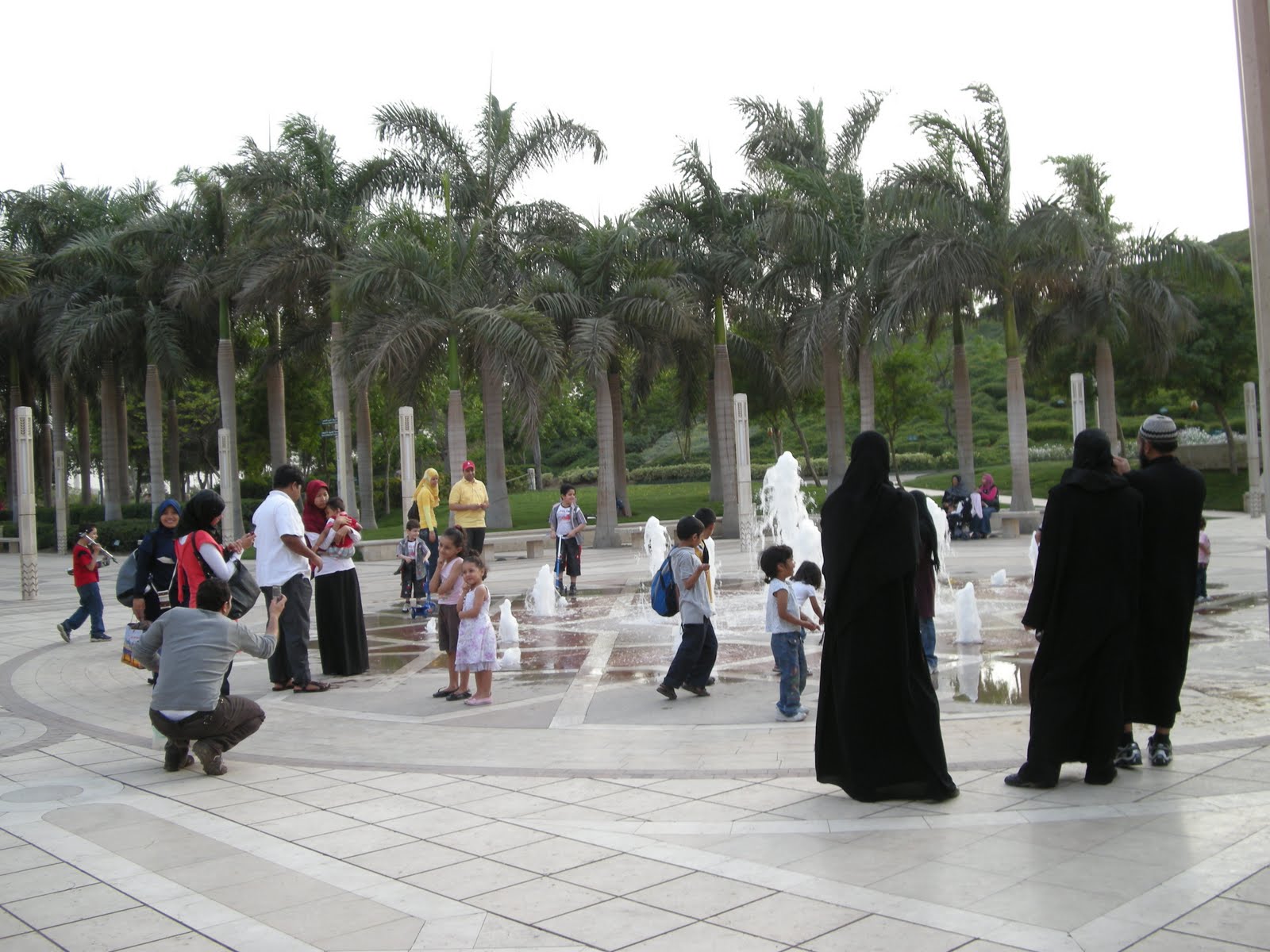
After a hot and dusty walk along the main road by the City of the Dead, we then eventually made it to Al Azhar Park.  There were plenty of Cairenes enjoying the park the late afternoon and we soon attracted a crowd of children come to stare and smile at us and practice their English - typically "Hello", "Welcome to Egypt" and "What is your name?"


After that it was a short taxi ride to the Khan al Khalili to enjoy the cooler evening in Midan Hussein, watching the locals come out to play.  We then found our way across to the Wikala of al-Ghouri for the free Whirling Dervish show.  This was a beautiful evening featuring an amazing singer, dancing drummers, beautiful music and of course the colourful spectacle of the Whirling Dervish dance.  We had to resist the overwhelming urge to get up and join in - it looked like so much fun.  I would have given anything for the chance to be one of the background dancers and attend a one of their training sessions. 

Here is a very short video I took of the Sagat player and some photos of the Whirling.


Our last stop was the famous El Fishawi's coffee house for a chance to sit, watch people go by and engage in some amusing banter with some by passing vendors. 


If you want to receive regular updates from this blog, you can subscribe by email.

www.habibadance.com

Saturday, 5 June 2010

Welcome to Cairo!

The taxi ride from the airport proved an exciting opening to my Cairo holiday.  After a minor collision and the taxi driver needing to ask half the residents of Mohandiseen for directions, we eventually arrived at Lorna's to find that the lift up to her apartment wasn't working.  Luckily for us the driver then proceeded to carry our suitcases up the 8 flights to her apartment.  It was only once the driver descended again that Lorna told us "nothing wrong with the lift", pressed the call button and then opened the door. 

BellyLorna is a professional dancer Edinburgh, working in Cairo.  She also rents out rooms to visiting dancers to help make ends meet and we were lucky enough to have selected this as our accommodation of choice for the visit.  After settling us into the apartment and giving us a good dose of tourist info, plenty of instructions and even a phone with an Egyptian Sim card, Lorna headed off to work her first sail. 

That night, we went to join Lorna's boat, the Nile Pharaoh, for a dinner cruise and show and most of all to see Lorna herself, perform with her band.  We got a bit of the VIP treatment there, what with being Lorna's guests and all.

 
It was a great show, including some beautiful Arabic music, the first Tanoura of the holiday, and of course 2 sets performed by the beautiful Lorna.  Something I really enjoy about watching Lorna is the warmth and humour in her dancing, which I think is summed up in these pictures. 


The food was pretty good too and there was even a Tabouli that I'm still thinking about.  After her performance, Lorna hung out with us for the rest of the sail and then we returned to the flat to chill on her balcony.  Unfortunately this was also my first introduction to the Cairo mosquito who seemed particularly drawn to limbs soaked in Superdrug repellent. 

Day 2 proved too hot for the pyramids (Lorna went as far as checking the forecast and putting a note under the door to tell us so), so we went instead to Il Mathaf il Masri, the Egyptian Museum.  It was a great day out and we took in pretty much everything in the Top 10 list, and along with eyeballing the great Egyptian Pharaohs we also saw enough jewellery to whet the appetite for the costume shopping later to come. 


Night time came the chance to take the second of our Nile Cruises, this time the Nile Maxim to see Randa, a dancer I previously knew only by reputation, and You Tube of course.  The show lived up to expectations and Randa was indeed amazing, although to reveal my guilty secret, I loved her band and her two singers even more - my heart does not lie with belly dance.  Here is Randa, complete with Randa costumes and Randa band.


After the cruise, we were met by Lorna and her friends and whisked off to downtown bar called Arabesque of all places and a chance to let my hair town. Personally, I fell in love with the kitsch interior decor.


www.habibadance.com

Friday, 14 May 2010

Habiba Dance Edinburgh Festival Workshops

Here are some dates for your diary.

I'll be running 2 brand new Egyptian Dance workshops at The Salisbury Centre during the Edinburgh Festival in August 2010

The Golden Age of Egyptian Cinema

Sunday 1 August, 1.00-3.00pm

Dance like the Stars of Egypt’s Golden Age in a workshop inspired by the stars of the 1940s and 1950s era Egyptian cinema – Samia Gamal, Tahia Carioca and Naima Akif.

Classical Egyptian Dance is a new contemporary art form with ancient roots. It draws on the imagery and music of the Ottoman courts, the storytelling of Egypt's Golden Age of cinema, and the music of the classical Egyptian orchestras and famous singers whose radio broadcasts captivated the Arab world. You will find new ways to express this beautiful music and explore the playful and sensual sides of the dance.

This is a General level workshop and is suitable for those who are already familiar with the posture and basic moves of Egyptian dance or belly dance whether Improvers, Intermediate or more advanced students. Bring a full skirt if you have one and a silent hip belt.

Interpreting the Human Voice

Sunday 29 August, 1.00-3.00pm

This workshop will help you to connect with and dance to some of the classic Arabic Baladi (traditional) songs that form part of every dancers’ repertoire. We will also explore movements to interpret the beautiful Mawaal, sometimes considered the Egyptian Blues, a soulful improvisation of the voice that expresses feeling and emotion.


You will learn to find your own personal interpretation of this beautiful music, building on the moves and technique you already know, whilst emphasising the importance of musicality, rhythm and responsiveness.

This is a General level workshop and is suitable for those who are already familiar with the posture and basic moves of Egyptian dance or belly dance whether Improvers, Intermediates or Advanced students.

Bookings 

Both workshops each cost £12 full price or £10 concession.

To book contact the Salisbury Centre, 2 Salisbury Road, Edinburgh, EH16 5AB
Telephone: 0131 667 5438
email: office@salisburycentre.org

Bookings will open as soon as the Salisbury Centre Festival Programme is out.

I hope to see you there!

www.habibadance.com

Wednesday, 5 May 2010

Learning the Language

It wasn't meant to be a New Year's Resolution, but since January I have been learning Arabic.  And the whole experience has just been so rewarding I want to share something about what I have learned so far.

I had a pretty bad experience learning languages when I was at school and it's not something I ever thought I would be able to do.  Several years later, as an adult, I faced my fear and started going to beginners French classes.  I found it very motivating to learn at my own pace without the school environment and I stuck at it.  We're not talking complete fluency, but after about 3-4 years of study I found that I could pass pretty well in France and Belgium using what I had learned.  A little bit after that, I built on my knowledge of French and even managed to teach myself to speak a little Italian too.  So why all those years spend thinking I couldn't do languages?  Just like learning any new skill, whether languages, dance, or anything there simply isn't a good or bad at, there's only learning in the way that suits you.

So what about the Arabic?  Well I like the sound of it, I love the music and the songs.  And when I listened to the music and read song translations I found I could start picking out the words that I recognised and some of the basic patterns in the language.  I thought about going one step further and learning it properly.  Yes Arabic is very different, but could it really be so difficult?

Around the turn of the year I had some happy accidents.  My friend posted a Facebook link to the You Tube channel Learn Arabic with Maha - containing a charming series of videos being made by an Arabic language teacher who had started teaching her Italian husband.  At the same time, I spotted a set of Beginners Arabic Adult Evening Classes run by the local council, starting that very week.  And all of this perfectly timed to happen right before the holiday to Egypt I had already booked.  All the pieces fell into place at the same time.  So with no reason to hold myself back I plunged in.

I want to say more about the different ways that I have been studying in a bit more detail, but I will have to come back to this at some point soon. 

It has been over 3 months now and I've been studying hard.  I won't be sure how much has actually sunk in till my plane actually lands in Cairo.  But I am very hopeful and I really do think, Insha'allah, that I will have something to say.

www.habibadance.com

Related Posts

Related Posts Plugin for WordPress, Blogger...